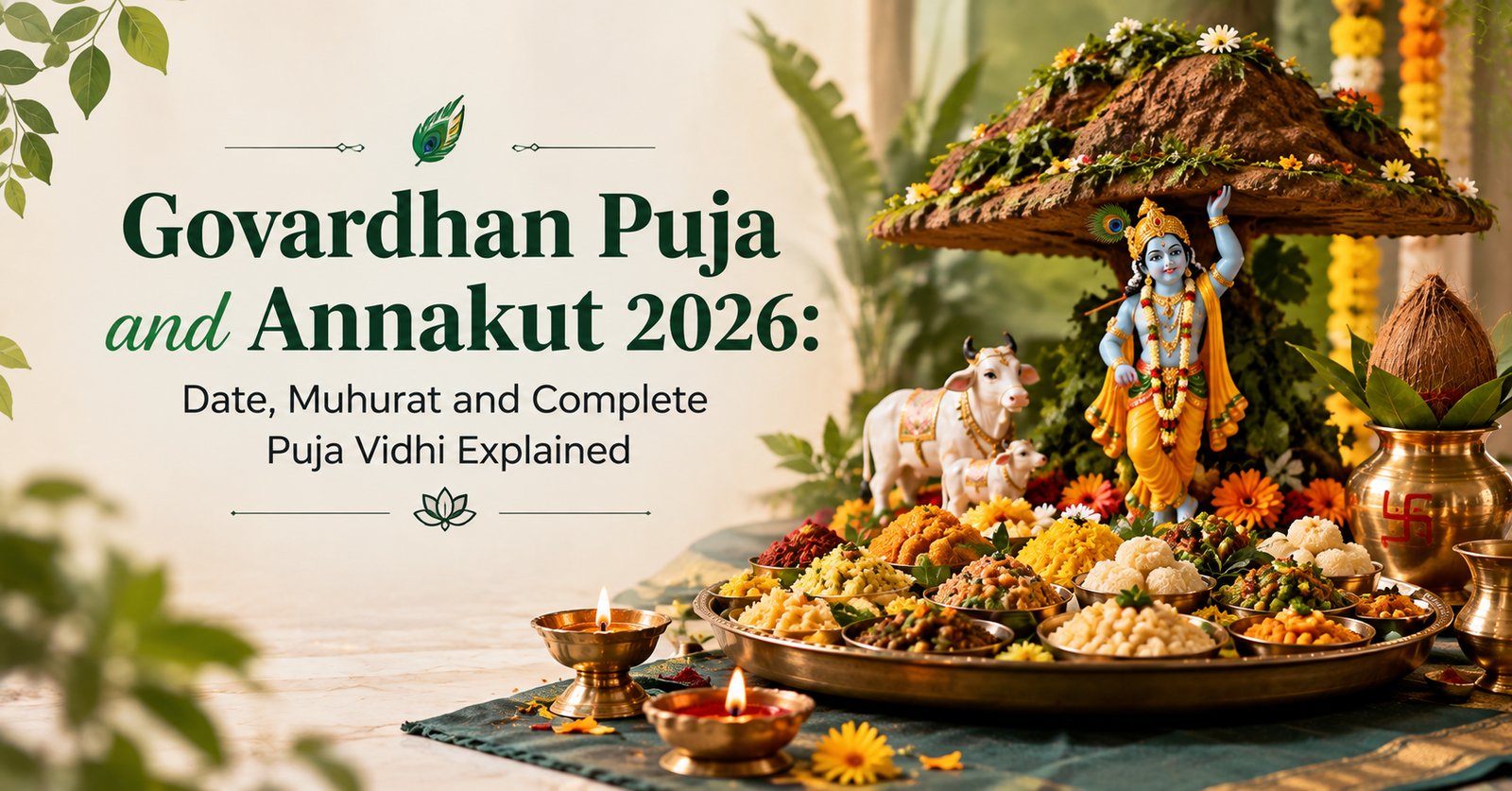
Planning this year’s Diwali week and trying to fix the govardhan puja 2026 date? For 2026, Govardhan Puja and Annakut in India fall on Tuesday, 10 November, the day after Lakshmi Puja.
This is the day to worship Govardhan Parvat and Sri Krishna, prepare Annakut bhog, and pray for protection, prosperity, and gratitude towards nature. If you’re unsure about the exact muhurat, samagri, or sequence of rituals, this guide focuses on the parts that usually confuse people.
Govardhan Puja 2026 Date And Basic Details
For most Hindu families, the first worry is timing: which date, which tithi, and what morning window for the main rituals so that the puja feels ritually sound.
Date And Shubh Muhurat
- Date: Tuesday, 10 November 2026
- Tithi / Nakshatra: Kartika Shukla Pratipada
- Tithi begins: 9 November 2026, 12:31 PM
- Tithi ends: 10 November 2026, 2:00 PM
- Govardhan Puja Pratahkala Muhurat: 6:40 AM to 8:50 AM
This morning window is considered best for performing the main worship, forming the Govardhan hill, and offering bhog.
The above timings are for New Delhi (IST). In other Indian cities, the sunrise-based muhurat may shift by a few minutes, so if you want very precise alignment, check your local panchang once.
Significance Of Govardhan Puja And Annakut
To put your heart into the rituals, it helps to keep the story of this day in mind and see how it connects to daily life.
Govardhan Puja recalls Sri Krishna lifting Govardhan Parvat to shelter the people of Braj from heavy rains sent by Indra. The worship of the hill reminds us to honour nature, land, cows, and food as forms of divine shelter and support.
Govardhan puja significance also lies in shifting focus from only worshipping wealth to thanking the forces that quietly support it: climate, crops, animals, and the community that produces our food.
Annakut means a “mountain of food”. Devotees offer a wide variety of dishes in gratitude, praying that no one in their home goes hungry and that they always have enough to share.
Govardhan Puja 2026 Muhurat And Practical Timing Tips
Most calendars in India agree that this festival in 2026 is on Tuesday, 10 November, with the main worship done in the morning, after Diwali night.
According to the panchang details above, the Pratipada tithi overlaps the early morning, and the recommended govardhan puja muhurat 2026 is between 6:40 AM and 8:50 AM in New Delhi.
If your family tradition follows a specific sampradaya or temple, they may suggest slightly different practical timings, for example after finishing Gau puja or Gudi worship first. In that case, align your home rituals with your family guru or local temple schedule.
Working families often do the main puja during the muhurat and keep the Annakut bhog darshan open for relatives and guests later through the morning.
Step-By-Step Govardhan Puja Vidhi At Home
Many people want to observe the rituals sincerely but don’t have a purohit at home. A simple, respectful govardhan puja vidhi is enough as long as it’s done with faith and cleanliness.
Preparations Before Sunrise
Wake up early, clean the house and puja area, and take a bath. Wear clean, preferably traditional clothes. If possible, light a diya from the Diwali akhand jyot and bring it to the puja space.
Spread a clean cloth or chowki where you’ll form the Govardhan. Keep an idol or photo of Sri Krishna, cow and calf images or idols, and a small kalash of water nearby.
Forming The Govardhan Hill
Traditionally, the hill is made from cow dung, decorated with flowers and rice. Where cow dung is not easily available, people use rangoli designs or clay, or even grains shaped like a hill.
Create smaller figures around the hill to symbolise cows and gopas. Some families also form a separate small image for Gauri and worship her along with Govardhan.
Main Puja Steps During Muhurat
Begin the worship within the Pratahkala muhurat. First, offer akshata (rice) and tilak to the Govardhan form and to Sri Krishna’s idol or photo.
Offer water and panchamrit if you’re performing abhishek, followed by flowers and incense, then diya and naivedya. Recite or listen to the Govardhan lila and Krishna aarti, or chant simple mantras like “Om Namo Bhagavate Vasudevaya”.
Perform parikrama (circumambulation) of the Govardhan form. This is usually done an odd number of times, like three or five rounds, based on family tradition.
How To Prepare Annakut In 2026
The food offerings are the heart of the celebration, but they shouldn’t leave you exhausted. Plan for variety you can actually cook, not for a photo-perfect spread.
Devotees often refer to the whole offering as annakut 2026, but treat it as a personal sankalp for this year. Decide in advance how many preparations you can genuinely manage without stress.
Include a mix of dry snacks and sweets, cooked vegetables and rice dishes, pooris and kheer or halwa, plus some fresh fruits. Avoid tasting anything once it’s set aside for bhog.
Arrange the dishes in steps or layers in front of Krishna, forming a small “mountain”. Keep water and tulsi leaves ready to place on some items before the final aarti.
Simple Annakut Planning For Busy Families
If you have office or school commitments on 10 November, do most prep on Diwali morning or afternoon. Many items like mathri and chakli, laddoo and shakarpara can be made a day earlier.
On the puja morning, focus on a few fresh dishes that cook quickly, like aloo ki sabzi with pulao, plus poori and kheer. This keeps the kitchen manageable and lets you be present for the puja itself.
Traditional Practices, Dos And Don’ts
Regional customs for this festival vary, but some common practices are followed in many parts of India.
Many families worship cows on this day, decorating them with garlands and feeding them special fodder. If possible, offer jaggery, green grass, or seasonal vegetables to cows with respect.
In some regions, people do Annakut aarti in the temple first, then bring a small part of that prasad home and place it near their own Govardhan hill.
Try to avoid starting major arguments, big financial decisions, or noisy household repairs exactly during the puja time. Keep the atmosphere calm, with bhajans or soft mantras playing.
Common Mistakes To Avoid
Rushing the puja at the last minute is the biggest mistake. Lay out your samagri the previous night so that the morning stays focused on worship, not searching for matches and flowers.
Another frequent problem is cooking so many items that half the food later goes to waste. Plan your Annakut quantities according to how many people will be around to honour the prasad.
Conclusion
With the govardhan puja 2026 date set for Tuesday, 10 November and the Pratahkala muhurat clearly defined, you can focus on preparing a meaningful and peaceful celebration at home.
Use this guide as a simple outline, then shape the details to match your family’s parampara and comfort level, and if you want a personalised puja plan or horoscope-based guidance, you can consult the experts at VisionAstro for deeper insight.
Frequently Asked Questions
Q1. When is Govardhan Puja in 2026?
Ans. In 2026, Govardhan Puja and Annakut are observed on Tuesday, 10 November, the day after Diwali. The Pratahkala puja muhurat in New Delhi is from 6:40 AM to 8:50 AM IST.
Q2. Can I do Govardhan Puja at home without a priest?
Ans. Yes, you can perform the puja at home with a simple, sincere vidhi. Keep the area clean, form a small Govardhan hill, offer bhog and aarti to Krishna, and follow the timing as closely as practical.
Q3. What should I include in Annakut offerings?
Ans. Annakut usually includes a mix of sweets and savoury snacks, cooked vegetables and rice dishes, pooris with kheer or halwa, and fruits. Aim for reasonable variety rather than an unmanageable number of items.
Q4. Do I have to make the Govardhan hill from cow dung?
Ans. Traditional practice is to use cow dung, but many people now use rangoli, clay, or grains shaped like a hill. The intention and respect matter more than the exact material, especially in urban homes.
Q5. What if I miss the exact Govardhan Puja muhurat?
Ans. If you miss part of the muhurat due to practical reasons, perform the puja as close to it as you reasonably can in the morning. Focus on devotion, cleanliness, and gratitude; rituals are there to support your bhakti, not create stress.