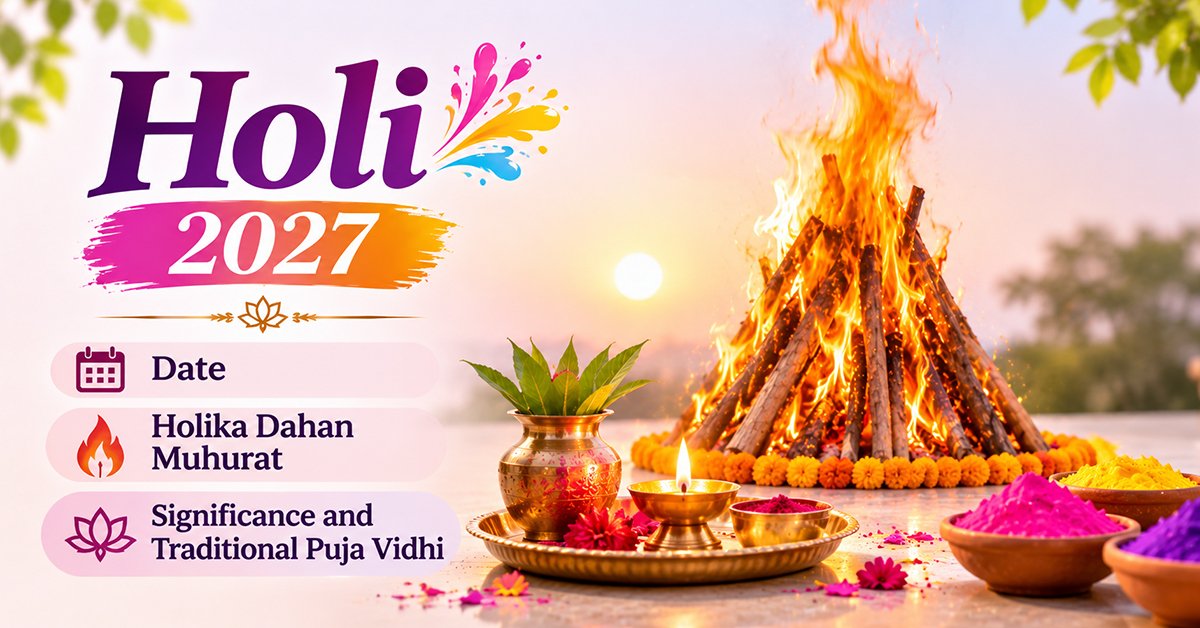
Planning for Holi starts early, especially when you need the exact holi 2027 date, Holika Dahan muhurat and a clear, traditional puja method you can actually follow at home. For 2027, Holika Dahan falls on Sunday, 21 March and Rangwali Holi on Monday, 22 March, which makes it a convenient long festive weekend for many families.
Still, people get confused by tithi, Bhadra and local panchang differences. You’ll see slightly different timings online, relatives insist on their version, and in the middle of it you just want to know: when to light the fire, what to prepare, and how to do the puja correctly without missing any important steps.
Holi 2027 Date, Holika Dahan And Puja Overview
For Holi, the lunar calendar matters more than the English dates, so first fix the day, then plan your rituals, travel and family gatherings around it.
Holi 2027 Date And Shubh Muhurat
- Holika Dahan Date: Sunday, 21 March 2027
- Tithi / Nakshatra: Phalguna Purnima
- Tithi Begins: 21 March 2027, 6:21 PM
- Tithi Ends: 22 March 2027, 4:13 PM
- Holika Dahan Muhurat: 6:33 PM to 8:55 PM (IST)
- Alternate Holika Dahan Muhurat (After Bhadra): 5:14 AM to 6:23 AM
- Bhadra Punchha: 1:26 AM to 2:31 AM
- Bhadra Mukha: 2:31 AM to 4:20 AM
- Rangwali Holi (Dhulandi) Date: Monday, 22 March 2027
- Rangwali Holi Tithi: Phalguna Purnima till 4:13 PM, then Chaitra Krishna Pratipada
The main Holika Dahan should be performed in the evening Pradosh period between 6:33 PM and 8:55 PM in New Delhi, avoiding the Bhadra phase. The morning alternate muhurat is mainly for specific local traditions; most families will follow the evening timing.
These timings are accurate for New Delhi and nearby regions in IST. Other Indian cities see small shifts, so always cross-check with your local panchang or family priest if you live far from North India.
Why Holi And Holika Dahan Are Spiritually Significant
Behind the colours and fun sits a deep idea: burning ego, jealousy and negativity before stepping into a new lunar year with lighter energy.
The Holika–Prahlad story symbolises faith winning over misuse of power. Holika’s boon failed when used for adharma, while Prahlad’s devotion protected him. That’s why people circle the fire asking for protection from inner and outer obstacles.
Holi also marks the transition from winter to summer in India. Farmers associate it with the rabi harvest and thankfulness for food, which is why grains and new crops are offered in the fire in many regions.
On a personal level, the festival gives you an excuse to reset strained relationships. The colours, laughter and teasing become a socially accepted way to drop grudges and reconnect.
Holika Dahan Muhurat 2027: How To Use The Timing Correctly
The holika dahan muhurat 2027 from 6:33 PM to 8:55 PM combines two conditions: Phalguna Purnima tithi and the evening Pradosh period without Bhadra, which is considered inauspicious for starting this ritual.
You don’t have to light the fire at the exact first minute of the muhurat. Aim to complete your basic puja and then perform parikrama and symbolic offerings while the auspicious window is active.
If your local community or housing society organises a common bonfire, request them to time the lighting roughly inside this window. A difference of a few minutes isn’t a problem, but avoid performing the main sankalp and parikrama during Bhadra.
The alternate morning muhurat from 5:14 AM to 6:23 AM is followed in a few traditions where night gatherings are difficult. If you choose that, prepare everything the previous evening so you’re not rushed at Brahma muhurat.
Step-By-Step Holi Puja Vidhi For Home
A traditional holi puja vidhi doesn’t have to be complicated. Focus on sankalp, the symbolism of the offerings and a calm, attentive mind.
Before you leave home for the main bonfire, set up a small place of worship facing east or north. Light a diya, incense and keep a thali ready with roli, chawal, haldi, kumkum, flowers, akshat, jaggery or sugar, whole wheat or barley grains, and a little water or Ganga jal.
Once you reach the Holika site, identify the Holika structure and Prahlad symbol (often a small pot or image). If your locality allows, carry a few cow dung cakes, wooden sticks or dry twigs from home as your own offering.
During the muhurat, stand facing the fire, join your palms, and take a simple sankalp for your family’s health, harmony and inner strength. Offer roli, chawal, flowers and grains to Holika, then circumambulate the fire, usually three or seven times, while praying silently or chanting simple mantras like “Om Narsimhay Namah”.
Common Mistakes To Avoid During Puja
People often treat Holika Dahan like a social bonfire and forget it’s a sacred fire. Avoid throwing plastic, glass, packaged snacks or alcohol into it, as this goes against the purity of the ritual and harms the environment.
Don’t mock or push anyone during parikrama; older people and children can easily trip. Give priority space to seniors and those carrying small kids, and keep gulaal and water play strictly for the next day, not at the fire itself.
Traditional Holi Significance In Daily Life
The deeper holi significance shows up in how families actually use this time to reset patterns. Many households burn symbolic objects tied to habits they want to drop, like a paper note listing fears or grudges.
Elders often tell children the Prahlad story on this night, stressing courage to stand by what’s right, even if it’s unpopular. That makes the festival more than just colour play; it becomes a values lesson passed down casually at the fireside.
Colour play the next day also has a community purpose. It breaks social barriers for a day, reduces formality and reminds people that under the colours, everyone looks similar, at least for a while.
For those living away from family, Holi often becomes a bridge to local friends and neighbours. Organising a small puja or colours meet-up in your building can stop the festival from shrinking into just a day off work.
Holika Dahan Date 2027 And Regional Variations
The core holika dahan date 2027 is the same across India: Phalguna Purnima on Sunday, 21 March, following the muhurat based on sunset in your region. What changes is how communities express the ritual.
In North India, especially in Uttar Pradesh, Rajasthan and Delhi, colonies build a central Holika with cow dung cakes and sticks collected over several days. In Maharashtra and Gujarat, you may see more emphasis on the next morning’s Rang Panchami-style celebrations.
Many South Indian families observe the tithi but don’t celebrate with large bonfires or colours. They still mark the day with simple home puja, chanting and a special meal, keeping the focus on the spiritual meaning rather than public celebration.
If you live in a mixed community, agree on a common time for the bonfire that respects both local panchang advice and the apartment association’s safety rules.
Safety And Environmental Tips For Holika Dahan
Use dry wood, cow dung cakes and natural materials instead of tyres, plastic or painted boards. These release toxic fumes and can cause breathing issues for children and older people standing nearby.
Keep a bucket of water or sand at the site, and make sure the fire is fully out before everyone disperses. If you collect ash next morning for tilak, wait until it’s completely cool and avoid loose clothing that might catch embers.
Preparing For Rangwali Holi 2027
Rangwali Holi on Monday, 22 March 2027 gives you a clear structure: Holika Dahan the previous evening, colours the next day, and rest or travel the day after for many working people.
Plan natural colours in advance, especially if you have sensitive skin or small children. Dry herbal gulaal, old cotton clothes and oiling hair and skin beforehand reduce irritation and make cleanup much easier.
Set basic rules with friends and neighbours: no forced colour, no water balloons from heights, and no strong chemicals. A quick meeting or notice in your building a few days before can prevent most arguments.
Simple Sankalp Ideas For Families
Many families use this festival to take one shared positive sankalp for the year. It could be as simple as eating at least one meal together daily, setting aside a weekly screen-free hour, or supporting one person in the extended family who needs help.
Linking your sankalp to Holi makes it easier to remember and discuss during the year, because you anchored it to a vivid, joyful festival rather than a random date.
Conclusion
With the confirmed holi 2027 date, clear Holika Dahan muhurat and a simple, grounded puja method, you can plan the festival in a way that respects tradition and fits real life. Mark Sunday, 21 March for the fire, Monday, 22 March for colours, and start aligning your family’s sankalp around what you truly want to burn and what you want to invite in.
If you keep the rituals sincere, the timings close to panchang guidance and the celebrations kind and mindful, Holi becomes more than a photo event; it becomes a turning point in your personal calendar, supported by insights from VisionAstro.
Frequently Asked Questions
Q1. When is Holi in 2027 and what is the main Holika Dahan muhurat?
Ans. In 2027, Holika Dahan is on Sunday, 21 March and Rangwali Holi (Dhulandi) is on Monday, 22 March. The primary Holika Dahan muhurat in New Delhi is from 6:33 PM to 8:55 PM IST during the evening Pradosh period.
Q2. Can I do Holika Dahan at home if there is no community bonfire?
Ans. Yes, you can perform a smaller, safe Holika Dahan at home if there is space and no building restrictions. Use a compact fire setup, natural materials, follow the muhurat as closely as possible, and focus on sankalp, offerings and parikrama with your family.
Q3. What basic items should I keep ready for Holi puja?
Ans. Keep roli, chawal, haldi, kumkum, flowers, akshat, jaggery or sugar, whole grains, incense, diya and clean water or Ganga jal. Many people also keep a coconut, new crop grains and sweets that are later shared as prasad after Holika Dahan.
Q4. Why is Bhadra avoided for Holika Dahan?
Ans. Bhadra is considered an inauspicious period for starting major rituals linked to victory or new beginnings. Scriptures advise that Holika Dahan, symbolising the destruction of negativity and protection of devotees, should not be done in Bhadra Mukha, so panchangs calculate a Pradosh window outside Bhadra.
Q5. Is Rangwali Holi always the day after Holika Dahan?
Ans. Yes, colour play is traditionally observed on the day after Holika Dahan, when people visit friends and family, apply gulaal and share sweets. The exact English date changes each year with the tithi, but the sequence of bonfire first and colours next remains consistent.
Q6. Are natural colours really necessary for Holi?
Ans. While not a religious rule, natural colours are far safer for skin, hair and the environment than chemical powders and strong dyes. Choosing herbal or homemade options and avoiding permanent colours reduces irritation, eye problems and water pollution after the festival.