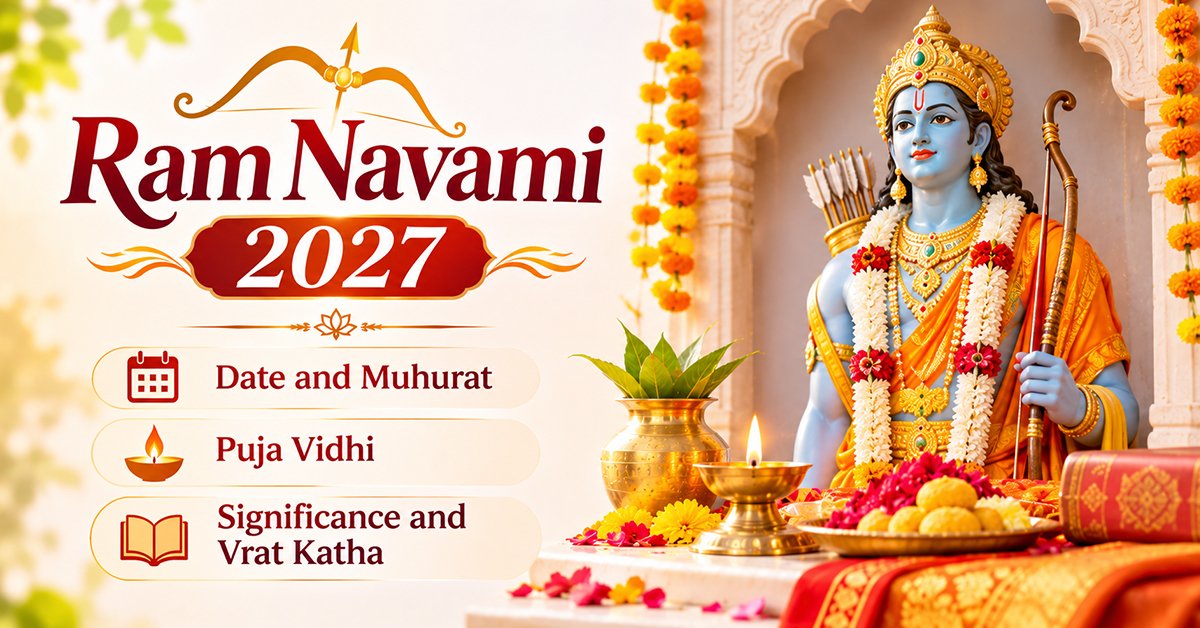
Planning for the sacred festival well in advance helps you observe it with full devotion, so let’s start with the basics: the ram navami 2027 date is Thursday, 15 April 2027, with the key midday worship window falling during Navami tithi.
If you usually depend on a family priest or last‑minute Panchang checks, this guide will walk you through the confirmed date, madhyahna muhurat, simple home puja steps, the deeper significance, and the vrat katha in clear language.
Ram Navami 2027 Date And Madhyahna Muhurat
For 2027, the festival is observed on Thursday, 15 April 2027 across most of India, based on the New Delhi Panchang calculations many cities follow.
Ram Navami 2027 Date And Shubh Muhurat
- Date: Thursday, 15 April 2027
- Tithi / Nakshatra: Chaitra Shukla Navami
- Tithi begins: 14 April 2027, 3:23 PM
- Tithi ends: 15 April 2027, 1:20 PM
- Rama Navami Madhyahna Puja Muhurat: 11:04 AM to 1:38 PM
The key rule is that the Navami tithi should prevail during madhyahna, the middle of the day. In 2027, this happens on 15 April, and the preferred time for the main puja and abhishek to Shri Ram is between 11:04 AM and 1:38 PM.
These timings are calculated for New Delhi (IST). In other Indian cities, the muhurat may shift slightly by a few minutes, so those who want exact precision can confirm with a local Panchang or family priest.
Ram Navami Significance In The Hindu Calendar
ram navami significance goes far beyond just marking the birthday of Shri Ram. For many households, this day represents an annual reset of dharma, discipline and family values.
The festival falls on Chaitra Shukla Navami, during the bright half of the first month of the Hindu lunar year. That’s why many people see it as an auspicious time to begin new initiatives, resolve family disputes, or restart regular satsang at home.
Spiritually, devotees meditate on Ram as Maryada Purushottam, the ideal human who balances courage, compassion and responsibility. Remembering his life on this day is seen as a way to bring more balance into one’s own conduct.
From a traditional standpoint, people observe this vrat to seek blessings for children, stability in marriage, and protection from unexpected obstacles. Temples often conduct akhand Ramayana paath starting from Chaitra Navratri and concluding on this day.
Simple Ram Navami Puja Vidhi At Home
Many families feel unsure about the exact steps, so let’s walk through a practical, clear ram navami puja vidhi suitable for a typical Indian home. You don’t need elaborate arrangements; consistency and bhav matter most.
Start your preparations on the previous evening by cleaning the puja area, washing the idols, and arranging a small jhula or special seat for Bal Ram if you have one. Keep flowers, roli, rice, incense, a diya, fruits, and a simple sweet like suji halwa or kheer ready.
On the festival day, take a bath before madhyahna, wear clean clothes, and sit for puja so you can complete the main part within the muhurat. Begin with a short Ganesh and Kuldevta prayer, then light the diya and incense.
Offer akshat, flowers, and chandan to Shri Ram, Sita, Lakshman, and Hanuman. Chant the Ramraksha Stotra, the first few dohas of Ramcharitmanas, or simply repeat the Ram naam for at least 11, 21 or 108 times, according to your comfort.
Perform a small abhishek with water or panchamrit over the idol or picture (if suitable), wipe gently, and adorn with new vastra if available. Conclude with aarti and distribute prasad to everyone in the house, including neighbours if possible.
Key Tips To Keep The Puja Focused
Many devotees get caught up in decoration and forget the inner focus. Keep the sankalp clear: pray for inner strength to follow dharma in daily life, not just for material gains.
If children are at home, involve them. Ask them to sing a bhajan, hold the aarti thali with you, or help distribute prasad. These small roles build a lifelong bond with the festival.
Understanding The Ram Navami Vrat
Most observant families treat this fast as part of the broader Chaitra Navratri, but some keep only this single‑day vrat. The rules are flexible, provided you maintain satvik discipline and sincerity.
Devotees generally avoid grains and heavy fried food, preferring fruits, milk, kuttu or singhara items, and simple vrat‑friendly preparations. Many people fast from sunrise till the completion of madhyahna puja, then eat a light satvik meal.
If health issues, pregnancy or age make strict fasting difficult, a phalahar fast or partial fast is perfectly acceptable. The key is to avoid anger, harsh speech and negative habits for the day, which carry more weight than food rules.
Those observing the vrat often read or listen to the ram navami vrat katha during the puja. In many homes, one person reads while others listen, which keeps the whole family involved.
Core Themes Of The Vrat Katha
The vrat katha usually narrates the circumstances of Shri Ram’s birth to King Dasharatha and Queen Kaushalya after years of childlessness and yajnas. It highlights their faith, patience, and commitment to righteous rule.
Another thread in many tellings is how observing this fast with sincerity is believed to remove obstacles in marriage, childbirth and family harmony. The deeper message is that trust in divine timing, paired with consistent effort, gradually clears long‑standing blocks.
How To Align Your Day With The Muhurat
The madhyahna window from 11:04 AM to 1:38 PM is the heart of the festival, so plan your schedule around it. The biggest mistake people make is starting preparations during the muhurat instead of beginning the actual worship.
Finish cooking, cleaning and most kitchen work before 10:30 AM. From then on, focus only on bathing, dressing the deities, and settling the family for the puja. Aim to begin your main worship at least by 11:30 AM so you’re fully in the flow before the midpoint.
If someone in the family is at work or school, you can still align with the muhurat by keeping the sankalp in mind and doing a short manas puja mentally, then performing a brief physical puja in the evening. Temples often conduct special evening aartis for working devotees.
Those living abroad or in a different time zone should use a reliable Panchang or consult a local priest, as the exact madhyahna changes with location, though the spiritual focus on Ram’s birth moment remains the same.
Bringing Ram’s Values Into Daily Life
The outer rituals make sense only when they touch how you live after the festival. Ram’s life offers a practical template for handling power, pain and relationships with dignity.
Use this day to review one or two areas where you feel out of alignment: maybe speaking sharply to parents, ignoring your health, or postponing an uncomfortable but necessary conversation. Offer that specific situation at the altar and ask for clarity.
Families often choose one new sankalp together, such as daily aarti, weekly Ramcharitmanas reading, or a simple act like avoiding hurtful gossip. Small, realistic commitments last longer than grand promises that fade in a week.
In this way, the festival becomes less about one intense day and more about a gentle but steady shift in how your home feels the rest of the year.
Conclusion
With the ram navami 2027 date clearly set for Thursday, 15 April 2027, and the madhyahna puja muhurat from 11:04 AM to 1:38 PM, you can now plan your vrat, puja and family schedule without doubt.
Use this clarity to make the festival quieter, more focused and rooted in Ram’s values, rather than rushed rituals. If you’d like deeper spiritual guidance or a personalised astrology perspective around this vrat, you can explore consultations with VisionAstro and prepare your heart for this auspicious day.
Frequently Asked Questions
Q1. When is Ram Navami in 2027 and what is the main puja time?
Ans. In 2027, Ram Navami falls on Thursday, 15 April 2027. The main madhyahna puja time is from 11:04 AM to 1:38 PM, when most devotees perform abhishek, aarti and the central part of their worship.
Q2. Do I have to keep a nirjal fast on Ram Navami?
Ans. No, a nirjal fast is not compulsory. Many devotees observe a simple phalahar fast with fruits, water and vrat‑friendly dishes. Health, age and medical needs should always be respected while deciding how strict your fasting will be.
Q3. Can Ram Navami puja be done in a small one‑room home?
Ans. Yes, the puja can be done in any clean corner of your home. Keep the area tidy, place a picture or idol of Shri Ram, light a diya, offer flowers and chant Ram naam with focus. Devotion matters far more than space or decoration.
Q4. Is group Ramayana paath necessary for the vrat to be complete?
Ans. Group Ramayana paath is auspicious but not mandatory. If time is limited, you can read a few dohas or one small chapter with sincerity, or listen to an audio paath while sitting in the puja area and focusing on the meaning.
Q5. What should children be encouraged to do on Ram Navami?
Ans. Children can help with decorations, arrange flowers, sing bhajans, read a short story from Ramayana or assist with distributing prasad. Giving them small, age‑appropriate roles makes the festival meaningful and memorable for them.
Q6. Can office‑goers observe the vrat if they cannot be home at madhyahna?
Ans. Yes, many working devotees keep the sankalp in mind, eat only vrat food at work and chant Ram naam quietly during the madhyahna window if possible. A short, focused puja can then be performed at home in the evening.