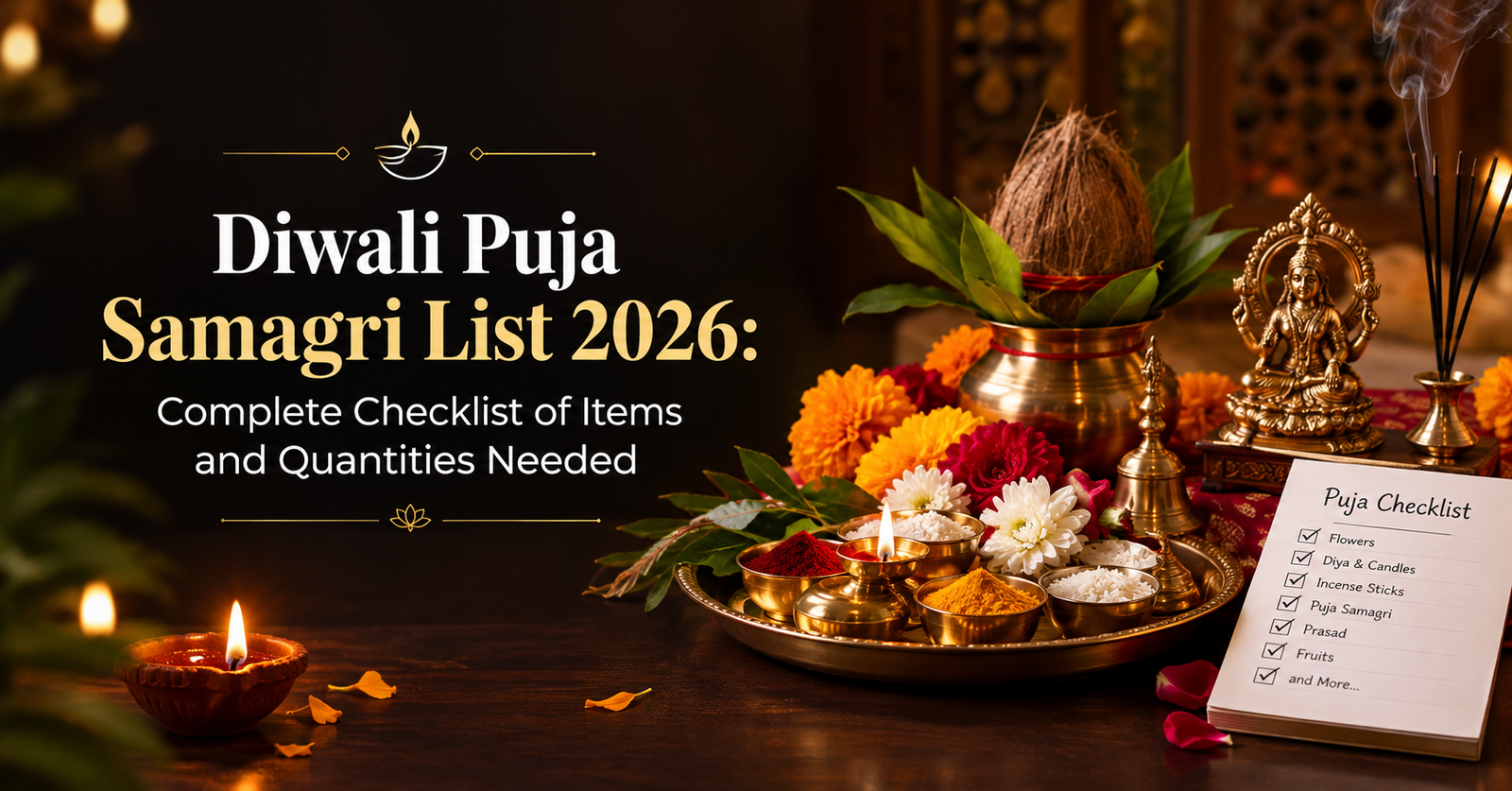
Planning Lakshmi Puja for Sunday, 08 November 2026, and worried you’ll miss something from your diwali puja samagri list? A clear checklist with approximate quantities makes the day calmer and the puja more focused.
This guide is built for a typical home puja in India, especially families doing Lakshmi–Ganesh Puja in the evening. You’ll find item-wise lists, how much to buy for a small family gathering, and how to arrange everything without last-minute stress.
Core Diwali Puja Samagri For Home Lakshmi Puja
For most homes, the heart of Diwali is Lakshmi–Ganesh Puja on Kartik Amavasya. Before you get into finer details, lock in the core spiritual items you simply cannot skip.
Diwali 2026 Date And Shubh Muhurat
- Date: Sunday, 08 November 2026
- Tithi / Nakshatra: Amavasya
- Lakshmi Puja Muhurat: 5:54 PM to 7:50 PM
This is the main Diwali night, when most families perform Lakshmi Puja during the muhurat after sunset. Try to finish cleaning, rangoli, and setup earlier in the day so you can start sankalp and worship comfortably within this window.
These timings are for New Delhi, India, and can shift slightly by city, so check a local Panchang or pandit for your exact location if you live elsewhere.
Main Deities And Setup Items
Start by keeping all deity and core setup items in one place so you don’t keep getting up during puja. For a small family of four to six people, this usually works well:
- Murti or photo of Goddess Lakshmi (sitting on lotus, preferably metal or framed)
- Murti or photo of Lord Ganesha
- Small Kalash (preferably copper or brass)
- Coconut (1, with husk if possible)
- Mango or Ashok leaves (5 or more for the Kalash)
- Red cloth (for asan and altar spread)
- Small wooden or metal chowki for placing the deities
- New account book or diary (bahi khata) if you do business Puja
Keep a clean table or platform, covered with a fresh cloth, reserved only for the puja setup. Don’t mix it with snacks or diya storage so the space stays sattvik and uncluttered.
Detailed Diwali Puja Items List With Sample Quantities
This section breaks down everyday items people forget until the last second. Quantities below are typical for a small family puja at home; scale up slightly if you expect many guests.
Basic Worship Items And Puja Thali
Most homes prepare one main thali near the altar and one small plate for prasad distribution. When you arrange your diwali puja thali items, gather these first:
- Roli / Kumkum: 1 small container
- Haldi (turmeric powder): 1 small container
- Chawal (akshat, unbroken rice): 1 small bowl
- Incense sticks (agarbatti): 1 packet
- Dhoop: 3–5 cones or sticks
- Camphor (kapoor): about 10–15 small pieces
- Matchbox or lighter: 1
- Diya (mitti or metal): 21 or more, based on your preference
- Ghee or oil for diyas: 250–500 ml
- Cotton wicks (batti): 1 packet
- Bell (ghanti): 1
- Small spoon for offering water and ghee: 1–2
Place roli, rice, haldi, flowers, and one diya neatly in a single plate so it’s easy to carry around the house when you do aarti and light diyas at doorways.
Items For Kalash And Panchamrit
The Kalash stands for abundance and auspiciousness, so don’t leave it for the last minute. For one Kalash, you generally need:
- Clean water: enough to fill the Kalash three-quarters
- Ganga jal: a few spoons mixed into the Kalash water if you use it
- Whole supari (betel nut): 1
- Haldi piece or powdered haldi: a pinch or 1 small piece
- Coins: 3–5 clean coins
- Mango or Ashok leaves: 5 or more
- Coconut: 1, placed on top of the Kalash
- Milk: 1 small cup
- Dahi (curd): 2–3 tablespoons
- Ghee: 1–2 teaspoons
- Honey: 1–2 teaspoons
- Sugar or mishri: 1–2 teaspoons
Prepare Panchamrit fresh just before the puja. Avoid making it too early, especially in hot weather, so the taste and freshness stay intact.
Lakshmi Puja Samagri: Flowers, Rangoli And Decor
For a complete lakshmi puja samagri setup, flowers and rangoli matter almost as much as the formal puja items. They set the mood of the home when you welcome Mahalakshmi.
Flowers And Garlands
Choose fresh flowers with a mild fragrance rather than artificial options for the main altar. Common choices across Indian homes are:
- Marigold (genda) garlands: 4–6, depending on doorway and altar size
- Loose flowers such as lotus if available, rose or chrysanthemum: 2–3 plates
- Bel or tulsi leaves if you worship other deities along with Lakshmi–Ganesh
Use one set for decorating the photo or idol, one for the door frame, and keep a bowl of loose petals just for offering during mantra and aarti.
Rangoli And Lighting
Rangoli around the entrance and near the altar is a traditional way of welcoming prosperity into the home. For a modest but attractive setup you’ll usually need:
- Rangoli colours: 1 medium pack with at least 4–5 colours
- Stencil (optional) if you’re short on time or not used to freehand designs
- Extra diyas to outline the rangoli and main entrance area
Draw the base outline in the afternoon so you only have to fill colours and place diyas close to the muhurat. This saves time and prevents rushing just before puja.
Laxmi Pujan Samagri List In Hindi (Key Terms)
Many families like to cross-check items in Hindi with their elders or a family pandit. Here is a compact Hindi-terminology list you can read out or photograph as your laxmi pujan samagri list in hindi reference.
- Murti / Chitr: Maa Lakshmi, Bhagwan Ganesh
- Chowki, laal kapda, asan
- Kalash, nariyal, aam ke patte
- Roli, haldi, chawal (akshat)
- Phool, mala, panchpatra, achamani
- Dhoop, agarbatti, kapoor, diya, baati, tel ya ghee
- Panchamrit ke tattva: doodh, dahi, ghee, shahad, cheeni
- Naivedya: phal, mithai, sukhda (meva)
- Nayi bahi, kalam (khaata pujan ke liye)
Adjust this list for your own parampara. Some regions add specific grains, cloth pieces, or yantras; include them if your family follows those customs.
Food Offerings, Naivedya And Sweets
Prasad can be very simple or elaborate, but it should always be satvik and prepared with attention. This is where many households overbuy and end up wasting food.
Traditional Naivedya Items
For a family Diwali Puja, two or three sweets and one savoury item are usually enough. Plan around what your family actually eats. A practical list is:
- Mishri or sugar crystals: 1 small bowl
- Dry fruits such as almonds, cashews or raisins: 1 plate in small quantities
- One homemade sweet like kheer, halwa, laddoo, or sheera
- Seasonal fruits: a few varieties in small pieces or whole
- Paan leaves and supari for traditional offerings if you follow that custom
If you expect guests, keep some sweets separately for serving, and reserve a smaller, dedicated plate only for the deity so nothing gets accidentally eaten before the puja is over.
Practical Tips To Organise Your Diwali Puja Samagri
A neat checklist helps, but the real peace comes from how you organise everything on Diwali day. A little planning on 07 or early on 08 November can save a lot of confusion later.
First, group items into a few trays: one for the altar setup, one for the main worship items related to aarti and offerings, one for food prasad, and one backup tray for extra diyas, wicks and matches. Label them lightly with sticky notes so family members know what goes where.
Next, assign roles. One person handles reading the mantras or following the puja book, another lights diyas and manages aarti, someone else takes care of naivedya and prasad distribution. Children can help with rangoli and placing diyas, which also keeps them engaged and respectful.
Keep waste bags, extra cloth pieces for quick cleaning, and a bucket of water or sand nearby for safety around so many diyas and candles. Practical details like this keep the evening safe and peaceful.
Conclusion
A well-planned diwali puja samagri list turns 08 November 2026 into a relaxed, devotional evening instead of a frantic search for missing items. Think in groups such as altar, thali, decor and prasad so nothing important gets left out.
Use this checklist as a base, customise it for your family traditions, and you’ll sit down for Lakshmi–Ganesh Puja calm, present and ready to pray, just as guides from VisionAstro would recommend.
Frequently Asked Questions
Q1. When is Diwali 2026 Lakshmi Puja and what is the muhurat?
Ans. Diwali 2026 Lakshmi Puja falls on Sunday, 08 November 2026, on Kartik Amavasya. The Lakshmi Puja Muhurat for New Delhi is from 5:54 PM to 7:50 PM IST, and most families aim to complete the main worship in this window.
Q2. How many diyas should I light for Diwali Lakshmi Puja at home?
Ans. There’s no fixed rule, but many families light 11, 21 or more diyas, based on space and safety. Focus on placing diyas at the main door, altar, windows and balcony, and make sure they are stable and away from flammable items.
Q3. Can I do Lakshmi Puja without a metal Kalash?
Ans. Yes, if you don’t have a metal Kalash, a clean, unused steel or even a sturdy glass vessel can be used with devotion. Follow the same method with water, leaves, coins and coconut, and keep the vessel stable and covered during the puja.
Q4. What should I avoid offering during Diwali Lakshmi Puja?
Ans. Avoid stale food, food with onion and garlic, and anything tasting sour or spoiled. Alcohol, meat and very spicy preparations are also not used as naivedya; keep the offerings simple, satvik and prepared fresh the same day.
Q5. How early can I prepare Diwali Puja Samagri?
Ans. Dry items like diyas, wicks, agarbatti and decorative pieces can be arranged a few days in advance. Perishable items such as flowers, fruits, sweets and Panchamrit ingredients should be arranged on the same day, preferably a few hours before the puja.
Q6. Is it necessary to do a full Vedic Lakshmi Puja, or is a simple aarti enough?
Ans. If you’re not familiar with full Vedic procedures, a sincere, simple puja with sankalp, basic offerings and aarti is completely fine. The intention and cleanliness of the space matter more than the length or complexity of the ritual.