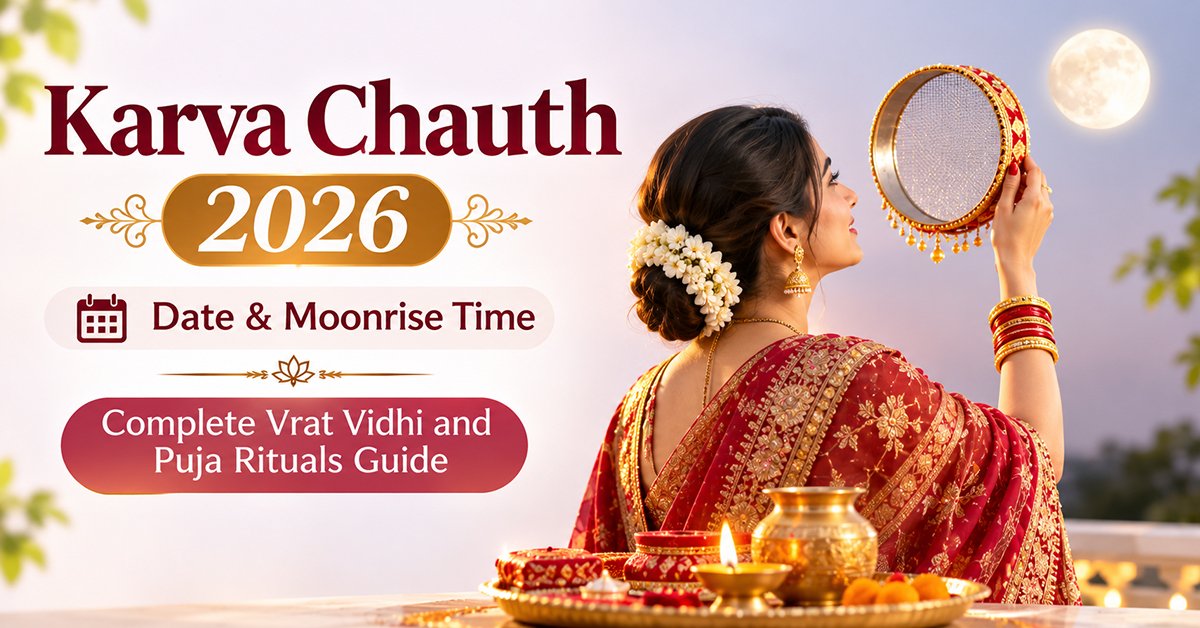
Planning your fast for Karva Chauth and not sure about the exact karva chauth 2026 date, moonrise time and puja steps? Here is a clear, pandit-style guide you can actually follow on the day without second-guessing yourself.
This guide brings together the confirmed Panchang timings for Thursday, 29 October 2026 (New Delhi basis), explains how the vrat is done traditionally, what you really need for the thali, and how to recite the katha without stress.
Karva Chauth 2026 Date And Significance
In 2026, Karva Chauth falls on Thursday, 29 October 2026, during Krishna Chaturthi of Kartika month. Married women, and in many homes even engaged or unmarried girls, observe a nirjala fast praying for the long life and prosperity of their husband or desired life partner.
The vrat is usually kept from sunrise to moonrise. Food and water are avoided, though some families allow sargi in the early morning given by the mother-in-law. The fast is broken only after sighting the moon and offering arghya.
Karva Chauth 2026 Date And Shubh Muhurat
- Date: Thursday, 29 October 2026
- Tithi / Nakshatra: Krishna Chaturthi; Tithi begins 29 October 2026 1:07 AM and ends 29 October 2026 10:10 PM
- Karva Chauth Puja Muhurat: 5:38 PM to 6:56 PM
- Moonrise (Chandrodaya) / Fast Ending Time: 8:12 PM
This evening window from 5:38 PM to 6:56 PM is the ideal time for Karva Chauth puja and for doing the traditional thali rotation and katha in the group. Moonrise at 8:12 PM is when the fast is completed with darshan of Chandra Dev and offering water.
The timings above are calculated for New Delhi, India (IST). In other cities the muhurat and moonrise shift slightly, so check a local Panchang for your exact location while using these timings as a reference.
Karva Chauth Moonrise Time 2026 Across India
The karva chauth moonrise time 2026 mentioned above, 8:12 PM, is for New Delhi. Moonrise changes by a few minutes depending on how far east or west your city is. Eastern cities see the moon a little earlier; western cities a little later.
As a simple thumb rule, if you live east of Delhi (for example Kolkata or Guwahati), expect moonrise a few minutes before 8:12 PM, and if you live west (for example Jaipur or Ahmedabad), expect it a few minutes after. Do not end your fast based only on someone’s social media post; always cross-check the time for your specific city.
On the day itself, many women keep a live watch on the sky from around 15–20 minutes before their expected time. Some also follow local temple or community announcements for the first clear sighting of the moon.
Complete Karva Chauth Vrat Vidhi Step By Step
The heart of Karva Chauth is the discipline and devotion of the fast. The traditional karva chauth vrat vidhi can vary slightly by region, but the basic sequence through the day remains similar.
Pre-Dawn Sargi And Sankalp
The day usually begins before sunrise with sargi, a plate sent by the mother-in-law. It typically contains pheni or sevaiyan in milk, fruits, dry fruits, some savoury snacks and sweets. Eat calmly, drink enough water, and keep some time for quiet prayer.
After sargi, bathe and sit facing east to take sankalp for the fast, mentally stating that you are observing this vrat on Kartika Krishna Chaturthi for the long life, good health and prosperity of your husband. From this point till moonrise, you follow the nirjala fast as per your family tradition.
Daytime Vrat And Evening Preparation
During the day, avoid heavy physical work as far as possible, especially after afternoon. Many women spend the daytime doing light household work, resting, applying mehendi, or preparing puja items for the evening.
An hour or two before the puja muhurat, bathe again or at least wash feet and hands, dress in clean or festive clothes, and wear mangalsutra, bangles, sindoor and bichhiya as per your custom. Arrange the puja space facing east or north.
Puja Samagri Checklist For Karva Chauth
Having the right karva chauth puja samagri ready earlier in the day saves last-minute rush when the puja muhurat starts. Most of these items are easily available in any puja samagri shop or local market.
Key items you will generally need include:
- Karva (small earthen pot) filled with water
- Channi (sieve) for seeing the moon and husband
- Kalash or lota, and a small plate for arghya
- Diya (earthen lamp), cotton wicks and oil or ghee
- Roli, chawal, haldi and kumkum
- Red cloth, dupatta or chunri
- Flowers, preferably red or yellow
- One or more decorated thalis for sindoor, sweets and diya
- Mathri, mewa, sweets like laddoo or barfi for naivedya
- Fruit, usually banana and seasonal fruits
- Karva Chauth calendar or image of Goddess Parvati and Lord Shiva
Some regions also keep small mud lamps around a makeshift well or symbolic representation of it. Follow your family elders’ advice for any extra items special to your community.
How To Perform The Evening Puja
The evening puja is done during the specified muhurat, facing the direction decided in your family tradition. In many homes, women sit in a circle, passing thalis and listening to the story together.
Traditional Karva Chauth Katha
The karva chauth katha is usually narrated by an elder lady or read from a vrat book while the group sits around the puja setup. During the story, women often rotate their thali in front of the image of Goddess Parvati and among themselves a fixed number of times, commonly seven.
The story generally revolves around a devoted queen or bride whose fast and faith protect her husband from death or misfortune. The exact version of the katha differs by region, but the message is the same: patience, discipline and unshakeable prayer draw divine grace on the marriage.
Thali Rotation, Aarti And Blessings
After the katha, perform aarti of Goddess Parvati and Lord Shiva. Offer roli, chawal, flowers and sweets, and mentally pray for marital happiness, mutual understanding, and protection from illness or accident for your husband.
In some homes, married women also exchange thalis or bless each other by applying kumkum and offering sweets. Touch the feet of elders in the family and receive their ashirwad before preparing for moonrise.
Moonrise Rituals And Breaking The Fast
As the moon rises around the expected time for your city, gather on the terrace, balcony or open space where the sky is clearly visible. Keep your channi, diya, kalash with water and plate ready.
Once the moon is visible, light the diya and look at the moon through the channi, sometimes after sprinkling a little water or rice in its direction as per custom. Then see your husband’s face through the same sieve, praying silently for his long life and good health.
Offer arghya to the moon by slowly pouring water from the kalash while facing Chandra Dev and reciting any familiar mantra or even a heartfelt personal prayer. After this, your husband usually offers you water and the first bite of food, formally opening the fast.
Eat light in the first meal after a full-day nirjala fast. Start with water, a small sweet or fruit, then simple food such as dal, soft roti, dahi or khichdi so your body settles comfortably.
Conclusion
With the confirmed karva chauth 2026 date, New Delhi moonrise time and clear vrat and puja steps, you can plan the festival calmly and give full attention to your prayer and family rather than logistics. Use this guide as a checklist from sargi to shayan, adapting the details to your own parampara and comfort.
If you wish to go deeper into personal charts or compatibility around this vrat, speak to a trusted astrologer beyond what you read on VisionAstro, and prepare for 29 October 2026 with both devotion and clarity.
Frequently Asked Questions
Q1. When is Karva Chauth in 2026?
Ans. Karva Chauth in 2026 is on Thursday, 29 October 2026, during Krishna Chaturthi. For New Delhi, the puja muhurat is from 5:38 PM to 6:56 PM and the fast is completed after moonrise at 8:12 PM.
Q2. What is the correct time to break the Karva Chauth fast in 2026?
Ans. The fast should be broken only after sighting the moon and offering arghya. In New Delhi in 2026, moonrise is at 8:12 PM, so the fast ends around that time, with slight variations for other cities.
Q3. Can I drink water during Karva Chauth vrat?
Ans. Traditionally Karva Chauth is observed as a nirjala fast, meaning no food and no water from sunrise to moonrise. Some families allow water or tea on medical advice, so follow your health needs and your family tradition first.
Q4. What should I put in the Karva Chauth puja thali?
Ans. A typical thali includes diya, roli, chawal, kumkum, flowers, sweets, fruits, sindoor, some money or dakshina, and a small vessel with water. Many women also decorate the thali with mehendi-style designs or coloured rice.
Q5. Is sargi compulsory for Karva Chauth?
Ans. Sargi is a loved tradition where the mother-in-law sends food and gifts before dawn, but it is not compulsory in a strict ritual sense. If your mother-in-law is not present or you are newly married, you can still keep the vrat with a simple pre-dawn meal.
Q6. Can unmarried girls keep Karva Chauth fast?
Ans. In many regions unmarried girls also observe the fast, praying for a good life partner or for the well-being of a fiancé. If you choose to do it, adjust the strictness of the fast according to your health and take guidance from elders at home.